HDOSE faculty receiving award.

HDOSE Honors 2025 Faculty Excellence Awardees

The University of Florida’s School of Human Development and Organizational Studies in Education (HDOSE) is proud to honor seven outstanding faculty members with the 2025 HDOSE Faculty Excellence Awards. These awards recognize exceptional contributions in research, teaching, and service that advance the School’s mission of fostering educational growth and human development.

This year’s awardees are:

  • Dr. Jinnie ShinEarly Career Excellence Award
  • Dr. Christopher ReddingMid-Career Excellence Award
  • Dr. Walter LeiteSenior Scholar Excellence Award
  • Dr. Jue WuTeaching Excellence Award
  • Dr. Christopher ThomasPublicly Engaged Scholar Award
  • Dr. Sara Jean-PhilippeMentoring Excellence Award
  • Dr. Cliff HaynesService Excellence Award

“These awards reflect the tireless dedication and innovativeness of our faculty in serving students and advancing knowledge,” said Dr. F. Chris Curran, Associate Director of HDOSE. “From teaching to research, HDOSE faculty are at the forefront of positive impact in their fields.”

HDOSE congratulates these faculty members for their achievements and thanks them for their continued contributions to the school, the profession, and the communities they serve.


About HDOSE
HDOSE faculty research and teach the foundations and structures of educational and community systems for people to thrive in their learning and development. We cultivate researchers, leaders, counselors, and administrators, empowering them to make evidence-based decisions that enhance human potential and educational growth.

To learn more about HDOSE degree programs, click here.

Note. This HDOSE highlights story was written using generative AI-assistance.

HDOSE Faculty Honored with College Awards for Research and Teaching Excellence

The University of Florida’s School of Human Development and Organizational Studies in Education (HDOSE) is proud to announce that four faculty members have been recognized with prestigious College of Education awards for their outstanding contributions to research and teaching.

Dr. Chris Redding, Associate Professor of Educational Leadership and Policy, has been awarded the 2025–2027 Rosser Term Professorship, a competitive honor that recognizes faculty for impactful research, teaching, and service and their impact on the discipline.

Dr. Chris Thomas, Assistant Professor of Educational Leadership and Policy, received the 2025 Robert B. Primack Memorial Foundations of Education Endowment Award, which supports scholarship on the social foundations of education.

In recognition of excellence in teaching, two HDOSE faculty members were also honored:

Dr. Mercedes Machado, Clinical Assistant Professor of Counselor Education, was awarded the 2025 Rosser Educator Excellence Award.

Dr. Jinnie Shin, Assistant Professor of Research Evaluation and Methodology, received the 2025 Diane E. Haines Teaching Excellence Award.

These awards reflect HDOSE’s commitment to innovative research and high-impact teaching and the University of Florida’s national leadership in education.

“We are proud of the accomplishments of each of these faculty and their well-deserved recognition for excellence in teaching and research.” said Dr. F. Chris Curran, HDOSE Associate Director. “HDOSE faculty are positively impacting schools and communities across Florida and beyond with their innovative work.”

About HDOSE
HDOSE faculty research and teach the foundations and structures of educational and community systems for people to thrive in their learning and development. We cultivate researchers, leaders, counselors, and administrators, empowering them to make evidence-based decisions that enhance human potential and educational growth.

To learn more about HDOSE degree programs, click here.

Note. This HDOSE highlights story was written using generative AI-assistance.

Dr. David Therriault Wins Poster Award for AI-Driven Educational Research

The University of Florida’s School of Human Development and Organizational Studies in Education (HDOSE) is proud to recognize Dr. David Therriault, associate professor of Educational Psychology, for receiving the Quantitative Research Poster Award at the UF Center for Teaching Excellence’s Research in Teaching and Learning (RiTL) Conference.

Dr. Therriault’s research, titled “Slaying Educational Zombie Claims with Empiricism and AI: Is the Pen Truly Mightier than the Laptop?”, explores differences in the effectiveness of student note-taking by hand and via computer, comparing these notes to AI-generated lecture summaries. The study found that computer-based notetaking was equally effective to hand-written note-taking. The project was co-authored with UF undergraduates Carina Swenson and Nitya Kodali, as well as Dr. Lise Abrams of Pomona College, showcasing the collaborative and interdisciplinary nature of the work.

This award builds on the popularity and impact of Educational Psychology courses at UF, which consistently attract large numbers of undergraduate students. Dr. Therriault’s lab plays a key role in this success, offering students hands-on research opportunities that bridge theory, data, and real-world application.

Undergraduate students in our College consistently seek out Dr. Therriaut as an instructor, and this type of research project displays one of the many reasons they value his courses,” said Dr. Corinne Manley, Director of HDOSE.

Dr. Therriault stated, “I am deeply grateful to the University of Florida for fostering an environment that encourages innovative research and collaboration. I extend my sincerest appreciation to my students, Carina Swenson and Nitya Kodali, who co-authored this project with me. This award not only recognizes our work but also serves as a testament to the incredible potential of our students and the power of interdisciplinary research.”

He went on to say, “I am thrilled to see the impact of our research on the field of educational psychology and the role of AI in shaping the future of education. Finally, I want to acknowledge the broader UF AI community, whose contributions have enabled us to explore new educational frontiers. I am honored to be part of this community.”

The project reflects UF’s national leadership in artificial intelligence and HDOSE’s commitment to applying AI in innovative ways to enhance educational systems. By integrating AI tools into educational research, HDOSE faculty are helping shape the future of evidence-based instruction and student engagement.

About HDOSE
HDOSE faculty research and teach the foundations and structures of educational and community systems for people to thrive in their learning and development. We cultivate researchers, leaders, counselors, and administrators, empowering them to make evidence-based decisions that enhance human potential and educational growth. To learn more about HDOSE degree programs, click here.

Note. This HDOSE highlights story was written using generative AI-assistance.

Dr. Chris Thomas Named 2025 NAEd/Spencer Postdoctoral Fellow

The University of Florida’s School of Human Development and Organizational Studies in Education (HDOSE) proudly announces that Dr. Chris Thomas, Assistant Professor of Educational Leadership and Policy, has been named a 2025 National Academy of Education (NAEd) and Spencer Foundation Postdoctoral Fellow. This prestigious fellowship is one of the most competitive early-career awards in the field of education.

Dr. Thomas’s project, titled “The Nurseries of Democracy: Education for Citizenship and the First Amendment Rights of Young Students,” explores how schools navigate the protection of free speech among their youngest learners. Drawing on his background as a former school district attorney, Dr. Thomas brings a unique legal and policy perspective to this timely and critical issue. His work was initially supported by the UF Early Childhood Policy Centers Collaborative through an internal seed-funding grant.

The NAEd/Spencer Fellowship supports innovative research that advances understanding of education across disciplines. Fellows join a distinguished cohort of scholars committed to shaping the future of education through rigorous inquiry and impactful scholarship. Dr. Thomas is the fourth UF scholar to receive this honor, further underscoring the university’s national leadership in education research.

I’m honored and thrilled to receive this fellowship. It’s incredibly meaningful to be recognized in this way based on my existing and emerging research. I’m humbled to find myself in the company of such esteemed scholars, and I’m excited to grow, contribute, and be challenged in the best possible ways.” said Dr. Thomas.

HDOSE Associate Director, Dr. Chris Curran added, “The NAEd/Spencer Fellowship recognizes the most promising junior scholars in the field. Dr. Thomas’ work is asking the big questions about education and bringing a unique legal perspective to the answers. We are proud of his accomplishment and the impact his work is having on schools and students.”

To learn more about the NAEd/Spencer Postdoctoral Fellowship and view the full list of 2025 fellows, visit the NAEd website.

About HDOSE
HDOSE faculty research and teach the foundations and structures of educational and community systems for people to thrive in their learning and development. We cultivate researchers, leaders, counselors, and administrators, empowering them to make evidence-based decisions that enhance human potential and educational growth. To learn more about HDOSE degree programs, click here.

Note. This HDOSE highlights story was written using generative AI-assistance.

HDOSE Faculty Recognized for Excellence in Undergraduate Teaching Innovation

The School of Human Development and Organizational Studies in Education (HDOSE) at the University of Florida proudly announces that three of its faculty members have been honored with the Technology Innovation and Learning Incentive Award from the College of Education, recognizing their outstanding contributions to undergraduate teaching.

Dr. Amber Moss (Counselor Education), Dr. David Therriault (Educational Psychology), and Dr. Eric Wright (Research and Evaluation Methodology) received this award for their innovative use of technology to enhance undergraduate learning experiences. Their work exemplifies the creative and impactful teaching approaches that are central to HDOSE’s mission.

The Technology Innovation and Learning Incentive Award is designed to support and celebrate faculty who integrate technology in ways that improve student engagement and academic success at the undergraduate level. The award highlights the importance of adapting teaching methods to meet the evolving needs of today’s learners and using tools including AI to enhance teaching.

HDOSE congratulates Drs. Moss, Therriault, and Wright on this well-earned recognition and applauds their dedication to advancing undergraduate education through innovation.


About HDOSE
HDOSE faculty research and teach the foundations and structures of educational and community systems for people to thrive in their learning and development. We cultivate researchers, leaders, counselors, and administrators, empowering them to make evidence-based decisions that enhance human potential and educational growth.

To learn more about HDOSE degree programs, click here.

Note. This HDOSE highlights story was written using generative AI-assistance.

A group of students in a classroom.

HDOSE Graduate Student Excellence Awardees

HDOSE Celebrates Inaugural Graduate Student Excellence Award Recipients

The University of Florida’s School of Human Development and Organizational Studies in Education (HDOSE) proudly announces the recipients of its inaugural Graduate Student Excellence Award, honoring eight outstanding graduate students for their exceptional achievements in coursework, research, and service.

Representing each of the school’s four program areas, the 2025 awardees exemplify the academic excellence, research productivity, leadership, and community engagement that define HDOSE’s mission. The 2025 awardees are:

  • Counselor Education: Codee Keighley and Matthew Stock
  • Educational Leadership and Policy: Katharine Harris-Walls and Tiffany Tan
  • Higher Education Administration: Hope Allchin and Matt Capaldi
  • Research and Evaluation Methodology: Anna Pauline Aguinalde and Bowen Wang

This new award was established to recognize graduate students who demonstrate excellence across multiple dimensions of their academic journey. Each recipient was nominated by faculty and selected for their commitment to advancing knowledge, supporting peers, and contributing meaningfully to their field.

HDOSE Associate Director, Dr. F. Chris Curran, noted “Our Graduate Student Excellence Awardees exemplify the oustanding students we have in HDOSE. Not only have they excelled in their academic studies, but they have driven impact in research and practice that are improving education and human development.”

The HDOSE Graduate Student Excellence Award reflects HDOSE’s ongoing commitment to fostering a vibrant and impactful academic environment. These students stand as examples of what it means to lead with purpose and integrity and are examples of the emerging researchers and practitioners that make HDOSE a leader in graduate education.

Awardee Profiles in the Words of their Faculty Nominators

Codee Keighley, Counselor Education 

Codee Keighley, a graduate student in the Counselor Education program, exemplifies what it means to be a leader both in and out of the classroom. Though Codee’s intellectual engagement is matched by a strong sense of integrity and a genuine passion for learning, Codee has left a mark on the program through service. Whether mentoring peers, volunteering for events, or stepping up to help with program initiatives, his commitment to service and support of others reflects a deep sense of responsibility and character. He leads with humility, creativity, and purpose. Codee has served as an executive board member on Chi Sigma Iota (Counseling Honor Society), and most recently served as a student rep on the search committee for the program’s recent hire.  

Matthew Stock, Counselor Education

Matthew Stock, a graduate student in the Counselor Education program, has distinguished himself as a model of academic excellence and leadership. His outstanding performance in the classroom reflects a deep intellectual curiosity, disciplined work ethic, and a commitment to the highest standards of scholarship. Matthew also sweetens the pot—quite literally—as he is known to share his love for baking by bringing homemade treats for his peers to enjoy. This thoughtful gesture not only brightens the day of those around him but also reflects his generosity of spirit and caring nature. It is a small but meaningful example of the warmth, kindness, and community-mindedness that define his character. 

Katharine Harris-Walls, Educational Leadership and Policy

Katharine Harris-Walls is a fourth year doctoral candidate in Educational Leadership and Policy. During her time at UF, she has co-authored publications in the leading journals in the field including Educational Evaluation and Policy Analysis, AERA Open, and the Review of Educational Research. She has also emerged as a national leader with the Association for Education Finance and Policy’s graduate student organization, leading mentoring opportunities for graduate students nationwide.  At UF, she has co-led the annual research symposium and served as a collaborative member of many grant funded research projects. She co-developed the online Introduction to Education Policy course for undergraduates in the BAES Program. This fall, she will begin a position as an Assistant Professor with a focus on teaching quantitative methods at Augusta University. 

Tiffany Tan, Educational Leadership and Policy

Tiffany Tan is a fourth year doctoral candidate in Educational Leadership and Policy. During her time at UF, she has served as a research assistant on numerous projects, contributing to publications in some of the leading journals in the field including Educational Evaluation and Policy Analysis. For the past year, she has worked part-time as a policy analyst with the Learning Policy Institute, a position she will assume full-time this fall.  Her work has contributed to our understanding of important issues including the teacher shortage and school staffing issues. 

Hope Allchin, Higher Education Administration 

Hope Allchin is a doctoral student in the Higher Education Administration Program. She has been a major contributor and co-author for numerous high-quality publications, including recent work in Education Finance and Policy and American Educational Research Journal. Hope has also conducted rigorous individual research focused on key issues in higher education policy and leads multiple teams of graduate research assistants on multiple externally funded grant projects.  

Matt Capaldi, Higher Education Administration

Matthew Capaldi is a doctoral student in the higher education administration program. Matthew has been a model for how doctoral students can give back to their program and fellow students. One of the most significant ways that Matthew has contributed has been through his instruction in EDH 7916: Contemporary Research in Higher Education  (“The R Class”). He served as the course’s teaching assistant for one year and as a co-instructor for two years. During his time with EDH7916, Matthew brought real teaching excellence to the table. He went above and beyond his formal responsibilities by jumping in to troubleshoot coding issues during class and holding weekly office hours to provide additional support. When students got stuck, he shared his own early struggles with coding, creating a supportive environment where students felt less intimidated by programming. He also maintained an excellent course website with tutorials and resources that students could access anytime. Beyond the classroom, Matthew has been a constant support for his peers as they learn and grow in their ability to conduct academic research. His service has gone beyond the university as he has facilitated a professional development workshop at the 2024 Association for the Study of Higher Education (ASHE) annual meeting. He also created a program to streamline the process of downloading IPEDS data in Stata and R, an invaluable tool for higher education researchers. 

Anna Pauline Aguinalde, Research Evaluation and Methodology

Pauline began her combined Master’s and Ph.D. program in Research and Evaluation Methodology in Spring 2023 and has demonstrated exceptional success and momentum ever since. She successfully defended her Master’s thesis in Spring 2025. Pauline has quickly established herself as one of the most productive and promising students. She has co-authored a journal article on research methods in Natural Language Processing (Shin & Aguinalde, 2025), published in one of the top-tier journals in the field (Research Methods in Applied Linguistics)—a rare accomplishment for a student at this stage. In addition, she has co-authored four highly competitive conference proceedings, including venues such as Educational Data Mining, Learning Analytics and Knowledge, and IEEE, with Pauline leading three of them as the first author. She has also presented her work at five major international and national conferences and has made substantial contributions to two additional journal articles currently under review. Achieving this level of scholarly productivity within just two years speaks volumes about Pauline’s extraordinary work ethic, creativity, independence, and future potential as a leading junior scholar in the field. 

Bowen Wang Research Evaluation and Methodology

As a doctoral candidate in the program of Research and Evaluation Methodology at the University of Florida, Bowen Wang has authored multiple peer-reviewed publications on psychometric models and AI-driven process data analyses. He presented his research at national conferences such as National Council on Measurement in (NCME). He had two competitive psychometrician internships—one at Graduate Management Admission Council (GMAC) and another at National Board of Medical Examiners (NBME)—and further contributes to the field by serving as a proposal reviewer for NCME. These accomplishments reflect his strong commitment to advancing both the theory and practice of educational measurement. 


About HDOSE
HDOSE faculty research and teach the foundations and structures of educational and community systems for people to thrive in their learning and development. We cultivate researchers, leaders, counselors, and administrators, empowering them to make evidence-based decisions that enhance human potential and educational growth.

To learn more about HDOSE degree programs, click here.

Note. This HDOSE highlights story was written using generative AI-assistance.
HDOSE Faculty Achieve New AI Credentials to Enhance Teaching and Research

HDOSE Faculty Achieve New AI Credentials to Enhance Teaching and Research

The School of Human Development and Organizational Studies in Education (HDOSE) is proud to announce accomplishments by its faculty in the area of artificial intelligence (AI). These achievements underscore the school’s commitment to integrating cutting-edge technology into educational practices and research.

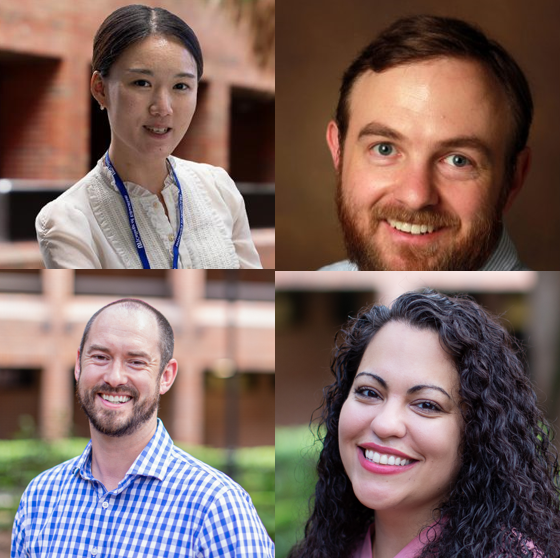
Dr. Tuuli Robinson, Clinical Assistant Professor of Educational Leadership, has been named a recipient of an Artificial Intelligence badge by the Center for Teaching Excellence. These prestigious badges are awarded to faculty members who attend a series of workshops and professional developments. The AI workshops focus on discovering innovative ways to use AI to support student learning.

“I believe there is a widespread excitement about the potential of AI to revolutionize education,” said Dr. Robinson. “The workshops offered by CTE create an excellent platform for learning and collaboration right here at UF, making AI implementation highly relevant to our work.”

In addition, Dr. Jennifer Kent, Visiting Clinical Assistant Professor in Educational Leadership and Policy, and Dr. David Miller, Professor in Research and Evaluation Methodology, have both completed the AI2 Learning Academy and Micro-Credential. They are now affiliated faculty for the AI2, a testament to their dedication to advancing AI in education.

“I am grateful that UF has demonstrated a commitment to our faculty becoming AI literate and empowers us to be leaders in this space” said Dr. Kent. “With what I’ve learned from the AI2 Center, I empower my graduate students in EL&P to pursue innovative learning that impacts their K-12 settings fostering more future-ready schools.”

Dr. Miller added, “Understanding and using AI has become a necessary set of skills in research and teaching in higher education.  The AI2 Center provides an important venue for faculty to continue to develop and keep up-to-date on AI.  I found their workshops on using AI to support student learning and teaching to be an excellent start in incorporating more AI into my teaching.”

The Director of the School of Human Development and Organizational Studies in Education, Dr. Corinne Manley, also expressed enthusiasm for these advancements. “We are facing unprecedented times in education with the growth of AI,” said the Director. “I’m so thankful for all the ways that UF is supporting our faculty in leading the way in this new world of AI and education!”

About HDOSE

HDOSE faculty research and teach the foundations and structures of educational and community systems for people to thrive in their learning and development. We cultivate researchers, leaders, counselors, and administrators, empowering them to make evidence-based decisions that enhance human potential and educational growth.

To learn more about HDOSE degree programs, click here.

Note. This HDOSE highlights story was written using generative AI-assistance.
HDOSE Faculty Research and Initiatives Support School and Community Safety and Health

HDOSE Faculty Research and Initiatives Support School and Community Safety and Health

Through innovative research and dedicated efforts, School of Human Development and Organizational Studies in Education (HDOSE) faculty members are making significant strides in improving safety, security, and health in schools and communities.

Dr. Melissa Mariani, Associate Professor of Counselor Education, recently published a study titled “The Importance of Prevention in School Safety Planning and Response” in the Journal of School Health. The study emphasizes the need for comprehensive school safety plans that include student-centered approaches addressing social, emotional, and behavioral well-being along with appropriate student support and discipline strategies and well-defined target hardening, threat assessment, and reporting measures.

School safety requires more than reactive measures—it demands proactive, evidence-based interventions. Research shows that integrating mental health services, social-emotional learning, and positive behavioral supports, alongside threat assessment creates safer, more supportive environments. said Dr. Mariani. ” A multi-tiered approach fosters a positive climate, intervenes early, and reduces both daily harm and extreme incidents.”

In addition, Dr. Laura Shannonhouse, Associate Professor of Counselor Education, has been invited to serve as a Scientific Advisor for the American Foundation of Suicide Prevention. Dr. Shannonhouse’s work aims to understand and improve system level responses and outcomes for those struggling with suicidality (i.e. school, aging, and university systems), and improve responses and outcomes with those impacted by disaster. She recently trained 60 of our graduate students in the evidence-based suicide intervention ASIST.

“Within a week of being trained our students reported providing 3 suicide interventions to persons at risk” said Dr. Shannonhouse. “It is really touching research as we track the fidelity of intervention components as well as intervention outcomes, while simultaneously wrapping what we learn back into the teaching and preparation of our students.”

This work complements ongoing efforts by Dr. F. Chris Curran, Associate Professor of Educational Leadership and Policy, who has collaborated with non-profit partners, including Safe Schools for Alex, to create a statewide Florida school safety data dashboard. This innovative tool provides valuable data to improve safety measures in schools across the state.

“Our collaboration with Safe Schools for Alex has enabled us to develop a comprehensive data dashboard that helps schools identify and address safety concerns,” said Dr. Curran. “By leveraging data and engaging with public audiences, we can enhance the safety and security of our schools.”

The Director of the School of Human Development and Organizational Studies in Education also expressed pride in these achievements. “HDOSE is centered around ensuring that educational environments are conducive to learning and can increase learning,” said the Director. “The work of our faculty to improve safety and health are wonderful examples of how our work continues to improve educational conditions to bolster learning.”

About HDOSE

HDOSE faculty research and teach the foundations and structures of educational and community systems for people to thrive in their learning and development. We cultivate researchers, leaders, counselors, and administrators, empowering them to make evidence-based decisions that enhance human potential and educational growth.

To learn more about HDOSE degree programs, click here.

Note. This HDOSE highlights story was written using generative AI-assistance.

UF College of Education receives second NSF CAREER grant to create framework for STEM education

The U.S. National Science Foundation awarded the College of Education with its second CAREER grant to promote STEM education.

The grant aims to help researchers plan long-term studies in STEM education. It will offer statistical advice, software and training materials to aid researchers. Overall, it hopes to improve STEM learning by providing these tools to educators and researchers.

Professor Wei Li, who is the principal investigator of the project, said the training developed from this grant will be applicable to STEM education, and to other social programs in health science, psychology and public policy.

“The research activities will develop new sample size planning methods to help STEM education researchers select the most appropriate longitudinal designs and analytic strategies under budget constraints,” Li said.

The project will contribute to the college’s existing STEM research through new integrated research and education activities, Li said.

“[The grant will help] enable graduate students, researchers and practitioners to utilize the statistical methods and tools developed from this project to design cost-efficient and flexible STEM education programs,” Li continued.

The $1.3 million NSF grant is a Faculty Early Career Development Program project supported by NSF’s EDU Core Research (ECR) program.

NSF’s first grant to the college in 2021 was to establish National Artificial Intelligence (AI) Research Institutes.

To learn more about the CoE’s funded research partnerships, click here.

-Wei Li

Justin Ortagus Spearheads Two Studies in Top Education Journals

College of Education professor Justin Ortagus is a prominent figure in educational research, dedicated to advancing our understanding of higher education. His collaborative efforts have led to two seminal studies that address pivotal issues in education, setting a standard for educators across the field. These studies, published in journals of the American Educational Research Association, explore the impact of exclusively online degree programs on student completion rates and the intricate relationship between state higher education funding strategies and student success, particularly among historically underserved students. Ortagus’ work not only contributes to the body of knowledge in higher education but also offers practical insights that can drive meaningful change.

“Although I’m excited that these studies were published in great outlets around the same time, it’s important to clarify that each study represents years of collaborative work,” noted Ortagus, director of the Institute of Higher Education. “Whether the focus is online education or how states fund colleges, these studies tackle big questions and offer evidence-based strategies to improve the opportunities and outcomes of college students.”

Exploring Exclusively Online Degree Programs

In their first study, Ortagus and his team delved into the effectiveness of exclusively online degree programs using national data and a quasi-experimental design. Their findings uncover a concerning trend: students enrolled in exclusively online programs are less likely to complete their bachelor’s degree compared to those engaged in a combination of online and face-to-face coursework. This trend persists across underrepresented demographic groups and is driven largely by for-profit four-year institutions.

Of particular note is the study’s attention to how online education affects different types of students. The study highlights disparities in completion rates among minoritized student populations. Despite accounting for various factors, the negative impact of exclusively online enrollment remains significant, emphasizing the need for comprehensive interventions to support student success in digital learning environments.

Unraveling State Higher Education Funding Strategies

Equally impactful, Ortagus and his team also investigated the complex relationship between state higher education funding strategies and student outcomes, with a focus on racially minoritized students. Through longitudinal data analysis and thorough examination, they reveal nuanced connections between funding mechanisms and college access and success.

Contrary to expectations, the study finds no substantial correlations between funding strategies and student outcomes at public universities. However, at community colleges, hybrid funding models incorporating base adjustments and enrollment or performance components show promise in increasing enrollment rates. Nevertheless, translating increased enrollment into completion remains a multifaceted challenge, necessitating further exploration and targeted interventions.

These scholarly pursuits provide invaluable insights into the complicated dynamics of higher education. Through meticulous research and impactful collaboration, Ortagus sheds light on critical issues surrounding exclusively online degree programs and state funding strategies, establishing a precedent for researchers and policymakers seeking to improve student outcomes. By harnessing these insights, stakeholders in higher education can work towards closing the persistent attainment gaps facing historically underserved college students.

Newly funded research

In addition to these recent publications, Ortagus has recently secured grants through the Institute of Educational Sciences as Principal Investigator (PI) and Co-PI respectively. Together the grants total nearly $4.4 million in research funding.

The Effects of Completing College-Level Courses in High School on Postsecondary Outcomes: A Systematic Review and Meta-Analysis
This research project aims to estimate how taking college-level courses in high school affects students’ college enrollment, persistence, and completion. The researchers will conduct a meta-analysis of studies from 2000 to 2025 to determine the overall benefits and how these effects vary among different student groups and program types. They will systematically review and code each study, then use advanced meta-analysis techniques to synthesize the findings and share the results with policymakers, practitioners, and researchers. Learn more.

Project REACT: A Multisite Randomized Controlled Trial to Improve College Re-Enrollment and Completion for Stopped-Out Students
The purpose of this research project is to evaluate the effectiveness, implementation, and cost of the REACT program, which aims to help community college students who are close to completing their degrees but have stopped out. The program includes multimodal messaging, tuition waivers for up to five courses, and student support services such as advising and personalized degree mapping. Researchers will work with four colleges in Florida to recruit 3,700 students and implement the program over five semesters, testing its impact on re-enrollment and degree completion while also gathering feedback from administrators and students for improvement. Learn more.

Justin Ortagus, Ph.D.